10/21/2026
Prohibition by Dosage
Sense or Nonsense: A THC Limit Is Just Another Safety Regulation
What if a regulation changes more than the amount of THC in a product?
What if it also changes which products can legally remain in the marketplace?
December 11, 2026, is approaching, and a new federal definition of hemp is scheduled to take effect.
You've heard about the deadline. You've heard about the 0.4-milligram threshold. And you've probably heard competing claims about what it means for consumers, farmers and businesses.
That's the smoke: A complicated legal change reduced to a single number—or a single headline.
The mirror: Looking at what the law actually says, what it may affect, and what questions remain unanswered.
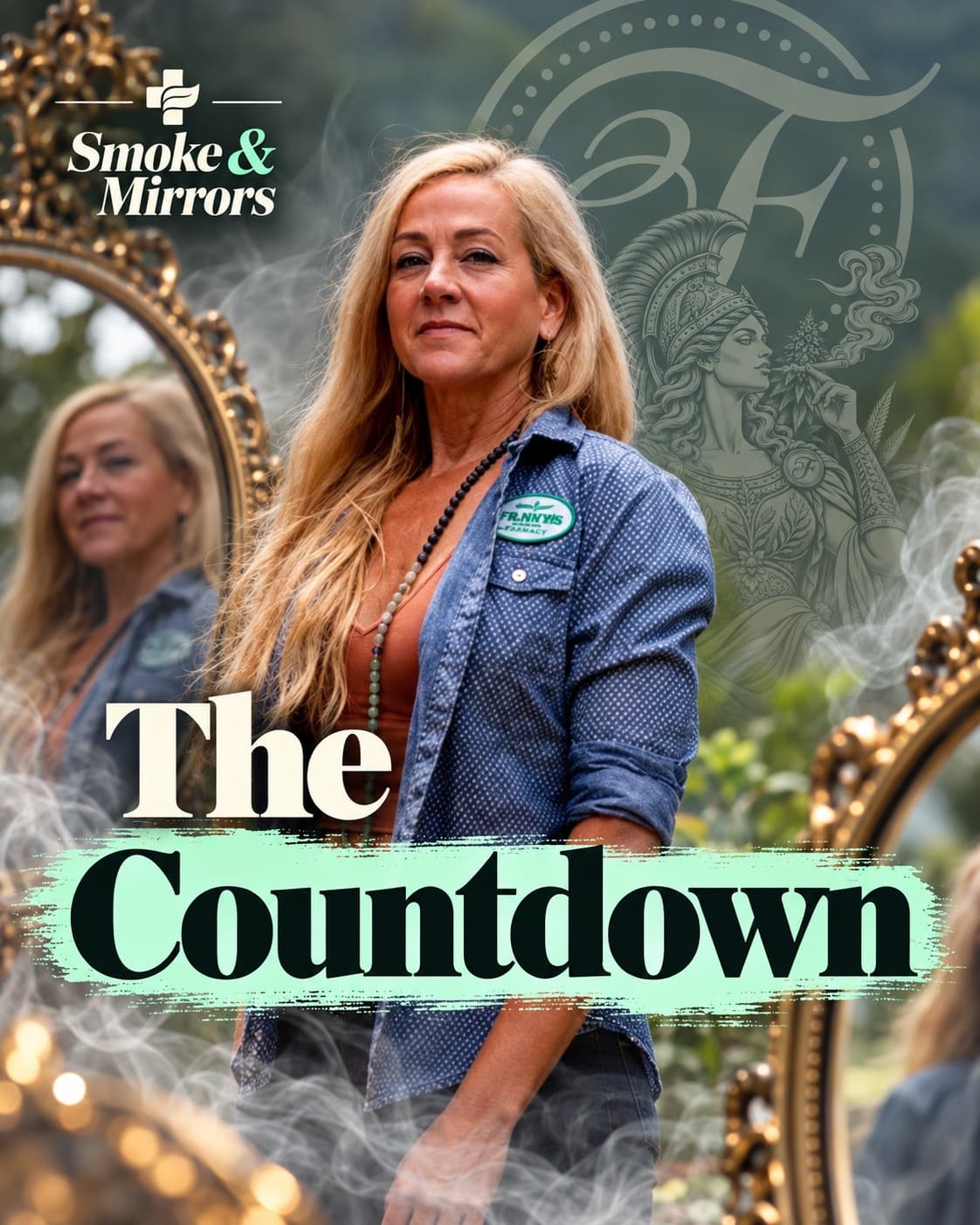
Welcome back to Smoke & Mirrors.
This episode examines a federal restriction Franny's Farmacy describes as “prohibition by dosage.”
That's our interpretation of its potential impact. Let's examine the facts behind it.
The Mirror: What Does 0.4 Milligrams Actually Mean?
The new federal hemp definition, enacted in 2025 and scheduled to take effect on December 11, 2026, changes how certain hemp-derived cannabinoid products qualify under federal law.
Among its provisions is a threshold of 0.4 milligrams combined total per finished container of total tetrahydrocannabinols, including THCA, and certain other cannabinoids with similar effects.
Per container. Not per serving.
That distinction is significant.
Consider a hypothetical package containing one gummy with 5 milligrams of THC.
That single gummy contains 12.5 times the 0.4-milligram threshold.
A package containing multiple gummies could exceed it by considerably more.
This comparison illustrates the scale of the change. Whether a particular product remains legally marketable depends on the complete statutory definition, its ingredients and other applicable laws.
The smoke is treating 0.4 milligrams as though it were simply a new recommended serving size.
The mirror is recognizing that the law establishes a threshold for covered finished containers—not merely individual servings.
Beyond Gummies: What Else Could Be Affected?
The discussion doesn't stop with THC gummies.
Depending on their cannabinoid content and other characteristics, the revised federal definition could affect products such as:
- Hemp-derived THC gummies and beverages
- Certain hemp flower and pre-roll products
- Some full-spectrum CBD products containing THC
- Other finished hemp-derived cannabinoid products
That doesn't mean every hemp product will become unlawful.
Products containing CBD isolate, for example, may present different compliance questions than full-spectrum products containing measurable THC. But compliance cannot be determined by a product's marketing category alone.
Testing, formulation, ingredients and the applicable legal definition all matter.
And here's a question worth exploring:
If a product is accurately labeled, independently tested and sold with appropriate safeguards, should its continued availability depend primarily on a per-container cannabinoid threshold?
Some policymakers and consumer advocates may view strict limits as a way to reduce exposure to intoxicating cannabinoids and address risks associated with certain products.
Others question whether a threshold this low is proportionate across different product categories and whether it leaves room for a workable regulated marketplace.
Both concerns deserve examination.
The Smoke: Regulation or Prohibition by Dosage?
Franny's Farmacy supports responsible hemp regulation.
We believe consumer protection should include meaningful product testing, accurate labeling, appropriate age restrictions and accountability for businesses that fail to follow the rules.
Those safeguards can help consumers understand what they're purchasing.
But here's where our concern begins.
When a legal definition sets a threshold that many existing products cannot meet without substantial reformulation—or cannot meet at all—the result may be the removal of those products from the federally lawful hemp marketplace.
That's why Franny's Farmacy uses the phrase “prohibition by dosage.”
It describes our concern about the practical effect of the restriction. It is not the law's official name or a determination that all hemp products are prohibited.
The distinction matters.
The smoke is the assumption that regulation and restriction always produce the same outcome.
The mirror is asking what a particular rule actually achieves.
Does it reduce identifiable consumer risks?
Does it encourage safer manufacturing and clearer labeling?
Does it provide realistic pathways for compliance?
And how should its effects on consumer access and legitimate businesses be evaluated?
These are questions we believe deserve evidence-based answers.
Another Layer of Smoke: Is December 11 the Only Deadline?
December 11, 2026, is the scheduled federal hemp deadline. But it may not be the only date North Carolina businesses need to watch.
Franny's Farmacy leadership has raised an important concern: if North Carolina's proposed HB 328 becomes law, it could establish additional state requirements on a timeline different from the federal government's.
Here's the smoke: Assuming that a change or delay at the federal level would automatically change North Carolina's requirements.
Here's the mirror: State and federal rules can operate on separate timelines. HB 328 is not yet law, but if enacted, its requirements could apply independently, subject to applicable legal limits.
Two different legislative processes. Potentially two different clocks.
We'll take a closer look at HB 328, the legislative process, and what separate compliance deadlines could mean for North Carolina in an upcoming Smoke & Mirrors episode.
For now, our focus remains on December 11—and what the federal 0.4-milligram threshold could mean for hemp products and the people who rely on them.
Beyond the Headlines: What Does the Countdown Mean for Real People?
Legislation can tell us what is changing.
But understanding how people may respond requires another kind of information.
Through Franny Tacy's decades of experience in farming, pharmaceuticals, hemp business operations and advocacy, Franny's Farmacy brings firsthand insight into the decisions that regulatory changes can create.
Manufacturers may need to examine formulations and production plans.
Retailers may need to evaluate inventory and purchasing decisions.
Farmers may face uncertainty about future demand.
Consumers may have questions about product availability and alternatives.
These are practical concerns informed by experience—not proof that every business or consumer will experience the same outcome.
Economic research offers another perspective.
Industry-sponsored estimates associated with Whitney Economics place North Carolina's hemp-related economic activity at approximately $3.2 billion annually, supporting roughly 16,000 direct and indirect jobs.
Those are estimates, not official government employment counts or predictions that every job will be lost.
They do, however, illustrate why policymakers should examine the potential consequences carefully.
The mirror isn't only the number written into federal law. It's also the evidence about how that number may affect the people and communities around it.
What Should We Be Asking Before December 11?
Rather than assuming the outcome is either entirely beneficial or entirely harmful, let's examine the questions underneath the debate.
What evidence supports the 0.4-milligram threshold?
How were different product types considered?
What role should serving size, product testing, labeling and age restrictions play in consumer protection?
Which products could realistically be reformulated?
How would consumers and businesses adapt?
And how might separate North Carolina requirements affect the same marketplace?
North Carolina's Advisory Council on Cannabis offers an opportunity for public participation in broader cannabis policy discussions.
Industry research, legislative records and firsthand experiences can all contribute to that conversation—but they should be identified for what they are.
A law is a documented fact. A projected economic impact is an estimate. A business experience is firsthand perspective. A policy recommendation is an opinion about what should happen next.
Smoke & Mirrors is committed to keeping those distinctions visible.
The Final Mirror: What Is the Countdown Really About?
Here's what we know.
December 11, 2026, is the scheduled effective date of the enacted federal hemp-definition changes.
The 0.4-milligram threshold applies per covered finished container, not per serving.
Some currently marketed hemp products could fall outside the revised federal definition. Not all hemp products are automatically prohibited.
North Carolina's HB 328 remains a proposal, but if enacted, it could create additional state requirements on a different timeline.
And the real-world consequences deserve careful examination rather than assumptions.
At Franny's Farmacy, our position remains clear.
We support responsible regulation. We oppose destruction disguised as regulation.
We believe consumer safety matters. So do transparency, accurate information, practical compliance and the people affected by policy decisions.
We bring our experience to the conversation because it helps us recognize questions that might otherwise be overlooked.
We examine the law and available evidence because experience alone cannot answer them.
The smoke is what makes the future sound already decided.
The mirror is what helps us distinguish the facts, the possibilities and the choices still ahead.
The countdown is on.
But the conversation shouldn't end with a number.
Sense or Nonsense? You decide.
Show us the evidence. Show us the money. Show us who benefits.
And show us how the rules will protect consumers while accounting for the people and businesses they affect.
Federal and State Legislation
Industry Research and Additional Perspectives
Franny's Farmacy's Position
🌿 THE FUTURE OF HEMP IS AT STAKE. THE CLOCK IS TICKING.
⏳ DECEMBER 11, 2026 — THE FEDERAL HEMP DEADLINE IS APPROACHING.
The December 11 federal hemp restrictions put North Carolina's $3.2 billion hemp industry, approximately 16,000 jobs, thousands of small businesses, farmers, and consumer access at risk.
Explore the legislation. Understand the consequences. Find your lawmakers, access ready-to-use contact scripts, and explore the Save NC Hemp petition.
👉 GET INFORMED & TAKE ACTION — SAVE NC HEMP
For additional North Carolina industry information, explore the NCRBA.
We Support Responsible Regulation. We Oppose Destruction Disguised as Regulation.
GET THE FACTS. SEE WHAT'S AT STAKE. MAKE YOUR VOICE HEARD.
THE COUNTDOWN IS ON. YOUR VOICE MATTERS.
“Don't believe everything you hear through the haze.
There's a difference between what sounds convincing and what's actually true.
Franny's is following the facts, asking the hard questions, and clearing up the confusion.
Don't let the conversation end here.”
Franny's Farmacy | Smoke & Mirrors | Hemp Education & Advocacy
Editorial Note: Smoke & Mirrors combines Franny Tacy's decades of experience in farming, pharmaceuticals, and hemp advocacy with firsthand industry perspectives, public information, and research. This series shares our perspective, examines current and proposed policies, and raises questions to encourage education, transparency, and informed decisions. Not all discussions reflect current law or established outcomes. Content is educational and advocacy commentary, not legal or medical advice.