10/19/2026
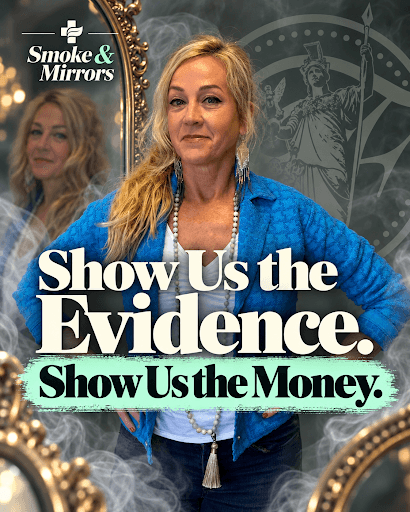
Show Us the Evidence. Show Us the Money.
Sense or Nonsense: If Hemp Stays Legal, Small Businesses Are Protected
Nonsense. It's not quite that simple.
A product can remain legal while becoming much more expensive to manufacture, distribute or sell.
And a business can support consumer protection while questioning whether the proposed cost of compliance is reasonable.
That's the conversation we're having in North Carolina.
Welcome back to Smoke & Mirrors.
In Part One, we introduced our mission: follow the facts, ask the hard questions and help people understand the decisions shaping hemp and cannabis.
Now we're looking at a specific proposal—and what it could mean for the people working to do things right.
What Does HB 328 Actually Propose?
North Carolina's House Bill 328, in its fourth edition, proposes a regulatory framework for hemp-derived consumable products.
It includes provisions addressing age restrictions, testing, packaging, licensing and enforcement. It also proposes restrictions on certain categories of hemp-derived cannabinoid products.
Those are important details.
Franny's Farmacy supports meaningful consumer safeguards, and some of the subjects addressed in HB 328—such as testing and keeping products away from minors—are exactly the kinds of protections we believe a responsible system should consider.
But a proposal deserves to be evaluated as a whole.
What products would remain available?
How would the rules work in practice?
What would businesses need to spend to comply?
And could the same safety goals be achieved with a different approach?
Those are fair questions, even when everyone agrees that consumer safety matters.
HB 328's fourth edition is a legislative proposal, not an enacted licensing system. Its status and language may change as the legislative process continues.
Let's Talk About the Cost of Being Legal
The fourth edition of HB 328 proposes the following licensing fees:
| Business Activity | Initial License | Annual Renewal |
|---|---|---|
| Manufacturer | $25,000 | $10,000 |
| Distributor | $5,000 | $1,500 |
| Retail location | $500 | $500 |
| Qualifying online retail website | $500 | $500 |
Source: North Carolina HB 328, fourth edition. These figures represent proposed licensing fees, not currently enacted charges under HB 328.
These are proposed fees, not charges currently being collected under HB 328.
Now imagine a North Carolina company that manufactures its own hemp products, distributes them and operates two retail locations.
If that company needed all of those licenses under the proposed framework, its fees would total:
$31,000 initially.
$12,500 in annual renewals.
That's an illustrative calculation based on the proposed fee schedule, not a bill issued to an actual business.
And it doesn't include testing, equipment, insurance, payroll, packaging or other operating expenses.
From our experience building a hemp business, those additional costs are very real.
A large company may have more room in its budget to absorb a fixed licensing fee. A smaller manufacturer may have far less.
That doesn't mean every small business would close.
It means we should ask whether the fee structure accounts for the different sizes and circumstances of the businesses it would regulate.
Same rules. Very different ability to pay.
Show Us the Money
The official legislative fiscal analysis estimates approximately $11.9 million in startup costs for Alcohol Law Enforcement, or ALE, and about $5.5 million in average annual recurring costs associated with the proposed program.
The analysis also projects licensing revenue exceeding recurring program costs in certain modeled years.
Those are projections—not money already collected through HB 328, and not evidence of improper intent.
But they're useful numbers for a public conversation.
How were the proposed fees determined?
What would the money pay for?
How much would support inspections, laboratory oversight, administration and enforcement?
Could fees be scaled differently while maintaining meaningful protections?
These are questions we believe lawmakers and regulators should be prepared to answer.
Because a licensing fee is one part of a regulatory system.
It is not, by itself, proof that a product is safe.
Consumer Protection Is Bigger Than a License
Let's give credit where it's due: a serious regulatory framework has real work to do.
It needs to address product testing, manufacturing quality, labeling, age verification, traceability and enforcement.
It also needs to account for the risks associated with different products and the consequences of noncompliance.
Bad operators shouldn't get a free pass while responsible businesses carry the burden.
We believe that strongly.
At the same time, we believe the rules should be practical, transparent and grounded in evidence.
If a product is restricted, what specific risk is the restriction intended to address?
If a fee is required, how does it support oversight?
If a business complies, is there a workable path for it to remain in the market?
Those questions don't undermine consumer safety.
They help us understand whether the proposed system delivers it.
Who Should Regulate Hemp and Cannabis?
HB 328 proposes a significant oversight role for ALE.
ALE has enforcement experience, which is relevant to age restrictions, unlawful sales and compliance.
But cannabis regulation also involves agriculture, product manufacturing, laboratory science, public health and consumer education.
That raises another question.
Would North Carolina benefit from a dedicated cannabis regulatory commission with expertise across those areas?
Or could an existing agency, given the right authority, resources and partnerships, do the job effectively?
A commission is an alternative worth discussing, not an automatic solution.
Neither model guarantees lower costs, better enforcement or stronger consumer protections.
The North Carolina Advisory Council on Cannabis is an advisory body; it is not an existing statewide cannabis licensing commission.
What matters is how any regulatory system is designed—and whether the public can evaluate its results.
You've Heard Us. Now Answer Us.
Franny's Farmacy invites North Carolina legislators and legislative candidates to explain their positions on hemp and cannabis regulation.
We want to understand what they support and why.
What standards would they require for testing, manufacturing and labeling?
What is their position on the federal hemp-definition changes scheduled for December 11, 2026?
How would their preferred approach protect children and consumers?
How would it affect farmers, manufacturers, small businesses and employees?
And how would they evaluate whether the system is accomplishing its stated goals?
As this effort develops, our intention is to share verifiable public positions with clear attribution.
A documented statement, an unanswered outreach request and an official's refusal to respond are not the same thing. We intend to treat them differently.
This isn't about assigning motives or telling people which candidates to support.
It's about giving North Carolinians a clearer view of the choices being made on their behalf.
The People Deserve More Than a Headline
Franny has spent decades working with this plant and listening to the people whose lives are connected to it.
She knows how much responsible farmers and businesses invest in doing things properly.
Additionally, she also knows that experience, however valuable, doesn't answer every scientific, economic or legal question.
That's why Smoke & Mirrors brings both to the table: firsthand perspective and evidence people can examine for themselves.
We're speaking up because we believe North Carolina can protect consumers without losing sight of the farmers, manufacturers, small businesses and families affected by its decisions.
We're asking questions because the answers matter.
And we're building a place where people can learn, compare perspectives, find their lawmakers and take informed action.
The future is uncertain.
Our position isn't.
We support responsible regulation. We oppose destruction disguised as regulation.
Show us the evidence. Show us the money. Show us who benefits.
And if you're going to call it protection, prove whom it protects.
Sources for This Investigation
- North Carolina HB 328 — official bill history and status
- North Carolina HB 328 — fourth edition, proposed bill text
- HB 328 — official legislative fiscal note
- Federal Public Law 119-37 — hemp-related provisions
Franny's Farmacy's Position
🌿 THE FUTURE OF HEMP IS AT STAKE. THE CLOCK IS TICKING.
⏳ DECEMBER 11, 2026 — THE FEDERAL HEMP DEADLINE IS APPROACHING.
The December 11 federal hemp restrictions put North Carolina's $3.2 billion hemp industry, approximately 16,000 jobs, thousands of small businesses, farmers, and consumer access at risk.
Explore the legislation. Understand the consequences. Find your lawmakers, access ready-to-use contact scripts, and explore the Save NC Hemp petition.
👉 GET INFORMED & TAKE ACTION — SAVE NC HEMP
For additional North Carolina industry information, explore the NCRBA.
We Support Responsible Regulation. We Oppose Destruction Disguised as Regulation.
GET THE FACTS. SEE WHAT'S AT STAKE. MAKE YOUR VOICE HEARD.
THE COUNTDOWN IS ON. YOUR VOICE MATTERS.
“Don't believe everything you hear through the haze.
There's a difference between what sounds convincing and what's actually true.
Franny's is following the facts, asking the hard questions, and clearing up the confusion.
Don't let the conversation end here.”
Franny's Farmacy | Smoke & Mirrors | Hemp Education & Advocacy
Editorial Note: Smoke & Mirrors combines Franny Tacy's decades of experience in farming, pharmaceuticals, and hemp advocacy with firsthand industry perspectives, public information, and research. This series shares our perspective, examines current and proposed policies, and raises questions to encourage education, transparency, and informed decisions. Not all discussions reflect current law or established outcomes. Content is educational and advocacy commentary, not legal or medical advice.