10/17/2026
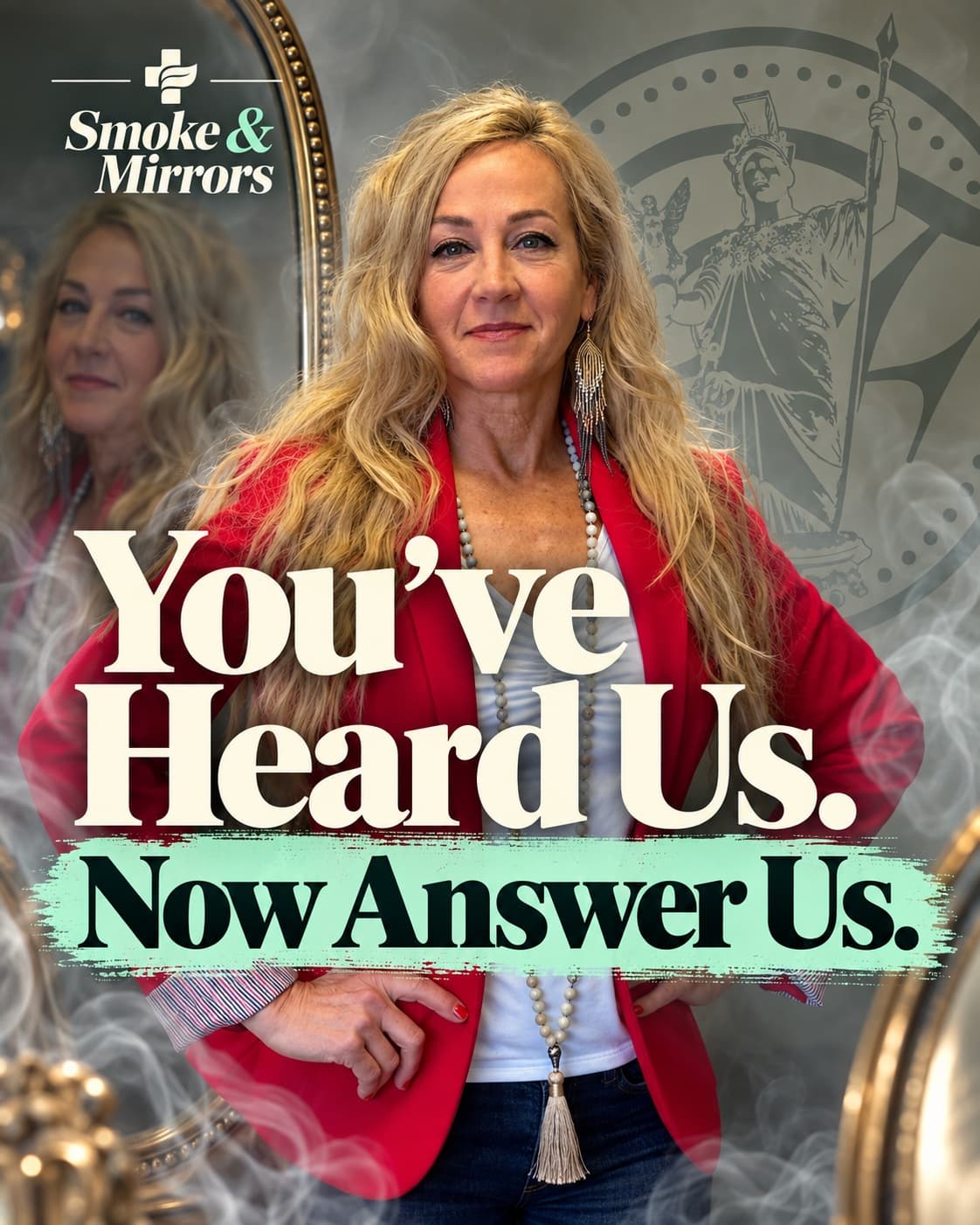
You've Heard Us. Now Answer Us
Sense or Nonsense: If It's Called Regulation, It Must Be Protecting Us
Nonsense. Not necessarily.
A law can be written with public safety in mind and still leave important questions about what it protects, who it affects, and whether there's a better way.
And right now, those questions matter more than ever.
Across North Carolina, farmers, business owners, manufacturers, employees and consumers are facing an uncertain future. Federal hemp rules are changing. State lawmakers are considering different approaches to cannabis and hemp regulation. And families who depend on this industry are trying to understand what comes next.
There's a lot of information out there.
There's also a lot of smoke.
Welcome to Smoke & Mirrors.
Why We're Speaking Up
Franny Tacy, founder and CEO of Franny's Farmacy, has spent decades learning about the cannabis plant, with experience spanning farming, the pharmaceutical industry, education and hemp advocacy.
In 2017, she became the first woman to legally plant hemp in North Carolina.
She's watched this industry grow from the ground up, sat in conversations with farmers, business owners, consumers and policymakers, and seen what responsible operators invest in, what consumers ask for, and how quickly uncertainty can change a business owner's plans.
That experience brings a valuable perspective.
It also raises important questions.
And we believe the people affected by these decisions deserve answers.
That's why Franny's Farmacy is launching Smoke & Mirrors, part of our SAVE NC HEMP education and advocacy efforts.
We're bringing together legislation, research, economic analysis and firsthand industry experience so people can look beyond the headlines and decide what they think.
We're not asking you to take our word for it. We're inviting you to look closer.
Responsible Regulation? We're All For It.
Let's clear something up.
Franny's Farmacy supports responsible regulation.
We support meaningful age verification, appropriate independent testing, accurate labeling, responsible manufacturing practices and accountability for businesses that fail to meet the rules.
Children deserve protection. Consumers deserve reliable information. Responsible businesses deserve clear standards.
And operators who ignore safety requirements should face consequences.
But here's where the conversation gets interesting.
A licensing system can establish important safeguards. It can also impose costs that are much harder for a small manufacturer or family-owned business to absorb than for a large company.
A product restriction can be intended to reduce risk. It can also change where consumers shop and which businesses survive.
Those outcomes aren't automatically good or bad simply because a proposal is called regulation.
We believe the details—and the people affected—deserve a closer look.
The Federal Deadline Is Real. The Full Impact Is Still Unfolding.
One major change is scheduled for December 11, 2026.
Federal legislation changes the definition of hemp, including a threshold of 0.4 milligrams of total THC and certain similar cannabinoids per finished container.
Not per serving.
Per finished container.
That is a meaningful distinction for businesses manufacturing and selling hemp-derived cannabinoid products.
Some products currently sold under the existing hemp framework may no longer meet the revised federal definition. Others may remain compliant. The effect will depend on the product, its ingredients and how the law applies.
For a manufacturer, that raises questions about reformulation and inventory.
For a retailer, it raises questions about which products can remain on the shelf.
For a farmer, it raises questions about demand.
And for consumers, it raises questions about access, availability and trustworthy alternatives.
From our experience in this industry, those aren't abstract concerns. They're conversations happening among people who have invested their work, savings and livelihoods in hemp.
The law establishes the change. How it will play out across individual businesses and communities is something we need to keep examining.
Behind Every Policy Are Real People
When we talk about hemp legislation, we're not just talking about products.
We're talking about the farmer who planted a crop.
The manufacturer who invested in equipment and quality controls.
The small-business owner who signed a lease and hired employees.
The veteran, older adult or family member trying to understand which products are legal, appropriately tested and available.
People use hemp products for different reasons. Their personal experiences matter to the conversation, even though they don't replace scientific evidence about safety or effectiveness.
That's the balance we want Smoke & Mirrors to bring.
Listen to people.
Read the research.
Examine the legislation.
And don't confuse a compelling claim with a proven fact.
You've Heard Us. Now Answer Us.
North Carolinians deserve to know where their elected officials stand on the future of hemp and cannabis regulation.
What consumer protections do they support?
How would those protections be enforced?
What would their proposals cost farmers, manufacturers, retailers and consumers?
How would they address products sold outside a compliant market?
And what evidence would they use to judge whether a policy is working?
These aren't questions meant to tell anyone how to vote or what to believe.
They're questions meant to help people make informed decisions.
Throughout Smoke & Mirrors, we'll distinguish what the law says, what the available evidence supports, what we've experienced firsthand, and what deserves further examination.
We'll make room for different perspectives.
And we'll keep coming back to the question that started it all:
Sense or Nonsense?
Because the future of this industry shouldn't be decided through confusion, fear or a catchy headline.
Show us the evidence. Show us the money. Show us who benefits.
And if it's called protection, the public deserves to know whom it protects.
Coming in Part Two: A closer look at North Carolina's HB 328, proposed licensing fees, consumer safeguards and the questions we're asking lawmakers.
Franny's Farmacy's Position
🌿 THE FUTURE OF HEMP IS AT STAKE. THE CLOCK IS TICKING.
⏳ DECEMBER 11, 2026 — THE FEDERAL HEMP DEADLINE IS APPROACHING.
The December 11 federal hemp restrictions put North Carolina's $3.2 billion hemp industry, approximately 16,000 jobs, thousands of small businesses, farmers, and consumer access at risk.
Explore the legislation. Understand the consequences. Find your lawmakers, access ready-to-use contact scripts, and explore the Save NC Hemp petition.
👉 GET INFORMED & TAKE ACTION — SAVE NC HEMP
For additional North Carolina industry information, explore the NCRBA.
We Support Responsible Regulation. We Oppose Destruction Disguised as Regulation.
GET THE FACTS. SEE WHAT'S AT STAKE. MAKE YOUR VOICE HEARD.
THE COUNTDOWN IS ON. YOUR VOICE MATTERS.
“Don't believe everything you hear through the haze.
There's a difference between what sounds convincing and what's actually true.
Franny's is following the facts, asking the hard questions, and clearing up the confusion.
Don't let the conversation end here.”
Franny's Farmacy | Smoke & Mirrors | Hemp Education & Advocacy
Editorial Note: Smoke & Mirrors combines Franny Tacy's decades of experience in farming, pharmaceuticals, and hemp advocacy with firsthand industry perspectives, public information, and research. This series shares our perspective, examines current and proposed policies, and raises questions to encourage education, transparency, and informed decisions. Not all discussions reflect current law or established outcomes. Content is educational and advocacy commentary, not legal or medical advice.